


.jpg)
Effective point-of-sale marketing can play a significant role in boosting sales and influencing purchasing decisions right at the point of sale. In brick-and-mortar retail in particular, companies rely heavily on POS advertising and sales displays to showcase their products and services in the best possible light.
Modern technologies such as digital signage allow content to be customized flexibly and designed to be interactive. Digital screens, interactive POS systems, and sophisticated digital signage software enable even more targeted customer engagement and enhance the shopping experience.
The point of sale (POS) is the place where customers come into direct contact with a product or service and make a purchasing decision. The term encompasses both physical locations, such as retail stores, and digital sales platforms, such as an online store.
Closely related is the term "Point of Purchase" (POP), which refers to the area where customers are actively encouraged to make a purchase. The POS is a critical touchpoint where companies deploy targeted POS marketing initiatives to influence purchasing decisions.
Although the terms are often used interchangeably, there is a subtle difference: The point of sale (POS) refers to the place of sale from the seller’s perspective—that is, the location where the product is offered. The point of purchase (POP), on the other hand, represents the buyer’s perspective and refers to the moment and place where the purchase decision is actually made.
💡Here's an example:
From the retailer’s perspective, a shelf stocked with chocolate bars in a supermarket is the POS. For the customer standing in front of that shelf who spontaneously decides to buy a bar, it is the POP—the point where the impulse to buy arises.
Essentially, these two terms are two sides of the same coin. For successful point-of-sale marketing, it is crucial to understand both perspectives: where the sale takes place (POS) and where the purchase decision is made (POP).
POS marketing encompasses all marketing activities implemented directly at the point of sale to specifically influence customers' purchasing decisions. These include digital customer catchers, digital signage displays, discount promotions, and visual merchandising.
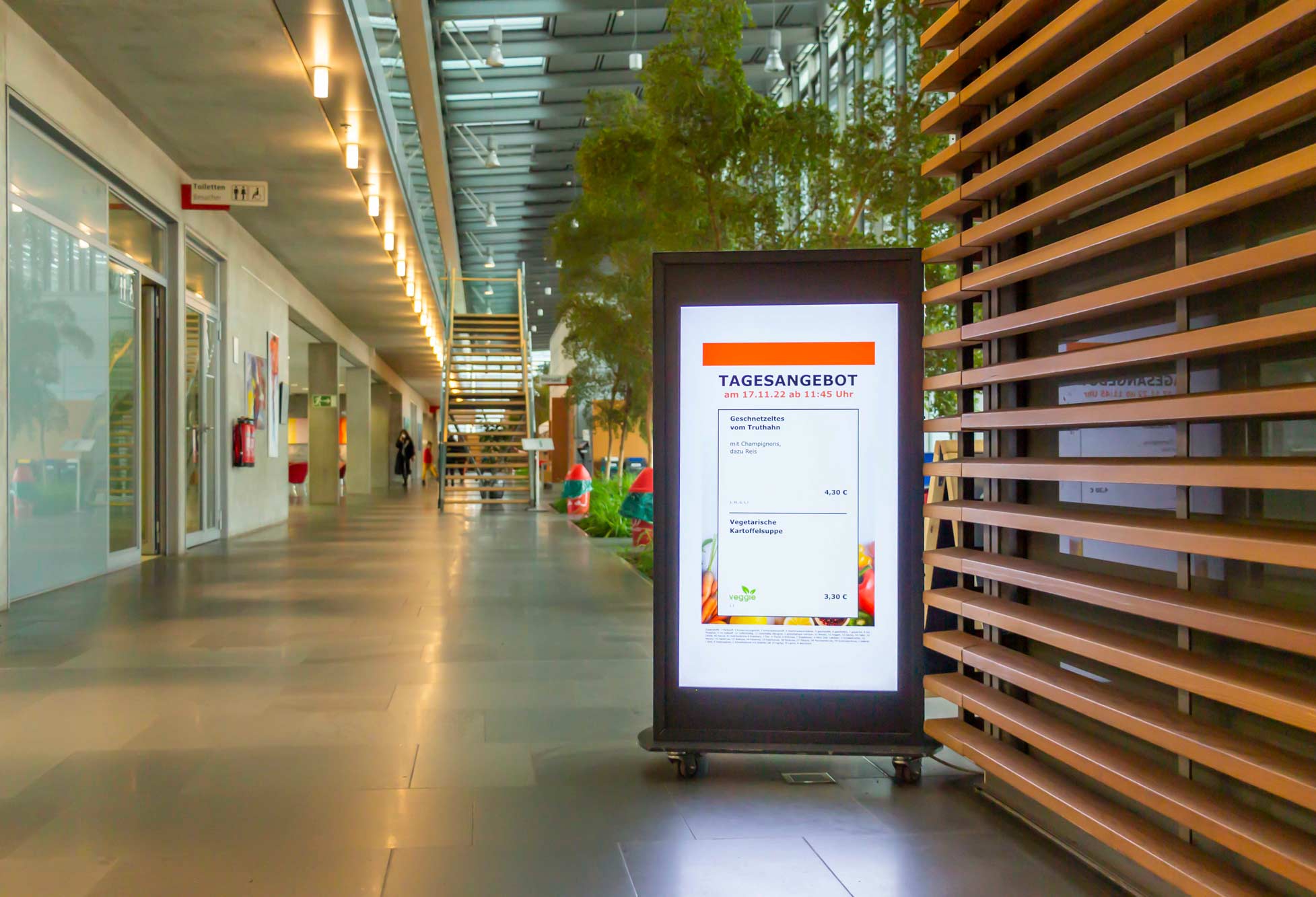
The goal is to draw attention to specific products, encourage impulse purchases, and enhance the shopping experience through targeted point-of-sale advertising. Digital signage solutions, in particular, enable flexible and dynamic implementation of these strategies by adapting content in real time and displaying personalized advertisements.
POS marketing varies depending on the business model.
In the B2B (business-to-business) sector, product presentations are often held at trade shows, in showrooms, or in specialty stores. Companies use digital POS solutions to present complex products in an interactive and informative way.
In the B2C (business-to-consumer) sector, the POS is used directly to influence purchasing decisions. Here, POS terminals, mobile POS solutions, and interactive displays are used to engage potential customers and drive sales.
.jpg)
Why is it worth investing in point-of-sale marketing? Because it allows you to reach your customers right where they make their purchasing decisions. Here are the key reasons:
💡 Practical tip: Combine traditional in-store advertising with modern technologies. Digital displays, interactive kiosks, and self-checkout solutions amplify the impact—while also reducing the workload on your staff.
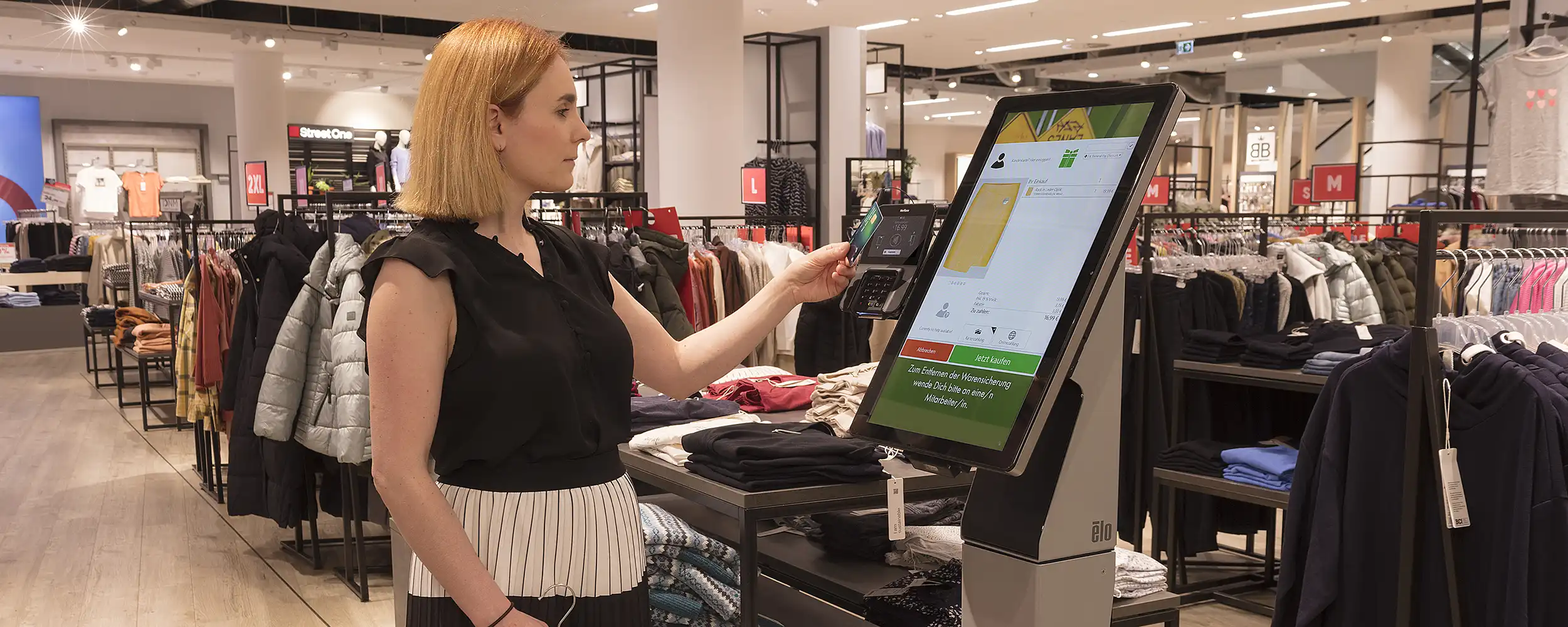
Successful POS marketing combines appealing product displays, targeted advertising, and interactive elements to reach potential customers right at the point of sale. Digital POS solutions enable companies to flexibly customize content, manage special promotions in real time, and offer targeted incentives to encourage purchases.
A well-placed sales display can highlight specific products and effectively draw customers' attention. Compared to static advertising media, digital advertising spaces and interactive touchscreens offer the advantage of being able to update and personalize content in real time.
Well-thought-out store design and visual merchandising are essential for success at the POS. Strategic product placement, appealing lighting, and the integration of digital signage displays create a modern and dynamic sales environment. Moving images, animations, and interactive elements not only increase customer loyalty but also the amount of time customers spend in the store.
Targeted discounts, special promotions, and personalized offers are proven methods for encouraging impulse purchases. Digital price displays, LED advertising pillars, and digital menu boards allow for quick updates to offers and targeted customer engagement. This enables POS systems and modern point-of-sale software to respond in real time to seasonal promotions, daily discounts, or customized advertising campaigns.
With interactive POS terminals, customers can directly access product information, view reviews, or place orders. This technology not only enhances convenience but also helps customers make better purchasing decisions. Digital customer displays and digital menu boards are particularly popular in the restaurant industry because they automatically update content based on the time of day, offering a high degree of flexibility.
By combining visual presentation, interactive elements, and flexible pricing, the point of sale (POS) becomes an even more effective sales tool.
.jpg)
A modern POS system is much more than just an electronic cash register. It serves as the digital heart of your sales process and supports you with intelligent features that go far beyond simply processing payments.
A modern POS system should offer the following features:
Keep track of your inventory and avoid overstocking or running out of stock. Automatic reorders save time and money.
Analyze sales data, identify trends, and make data-driven decisions. Which products are selling well? When are peak times?
Collect customer data, create profiles, and deliver personalized offers—for more targeted advertising at the point of sale and stronger customer loyalty.
Integrate your POS system with inventory management, accounting, and tax consulting for seamless processes.
With mobile checkout solutions, you can serve customers flexibly throughout the store—ideal for providing advice and reducing wait times.
From card payments and contactless transactions to mobile payments—modern systems support all common payment methods.
💡 Bütema Tip: With the InStore Assistant app and mERP hardware, you can seamlessly integrate digital sales processes with your inventory management system—for maximum efficiency at the POS.

A successful POS marketing strategy is based on a clearly defined target audience. Companies should analyze which products or services are particularly relevant to their customers and tailor their POS advertising accordingly.
💡Here'san example:
A café or bakery can use digital menu boards to automatically adjust its offerings based on the time of day. In the morning, the focus is on breakfast items such as croissants and specialty coffees, while at lunchtime, hearty snacks and lunch specials are promoted.
Tips for effective point-of-sale marketing with digital signage
✅ Use visual stimuli: High-quality images, animations, and videos spark interest.
✅ Incorporate interactive elements: Touchscreens and QR codes actively engage customers.
✅ Deliver personalized advertising: With the help of POS software, content can be tailored to specific audiences.
✅ Use an omnichannel strategy: Integrating with an online store enables a seamless shopping experience.
✅ Regular updates: Content on digital signage displays should always be up-to-date and relevant.
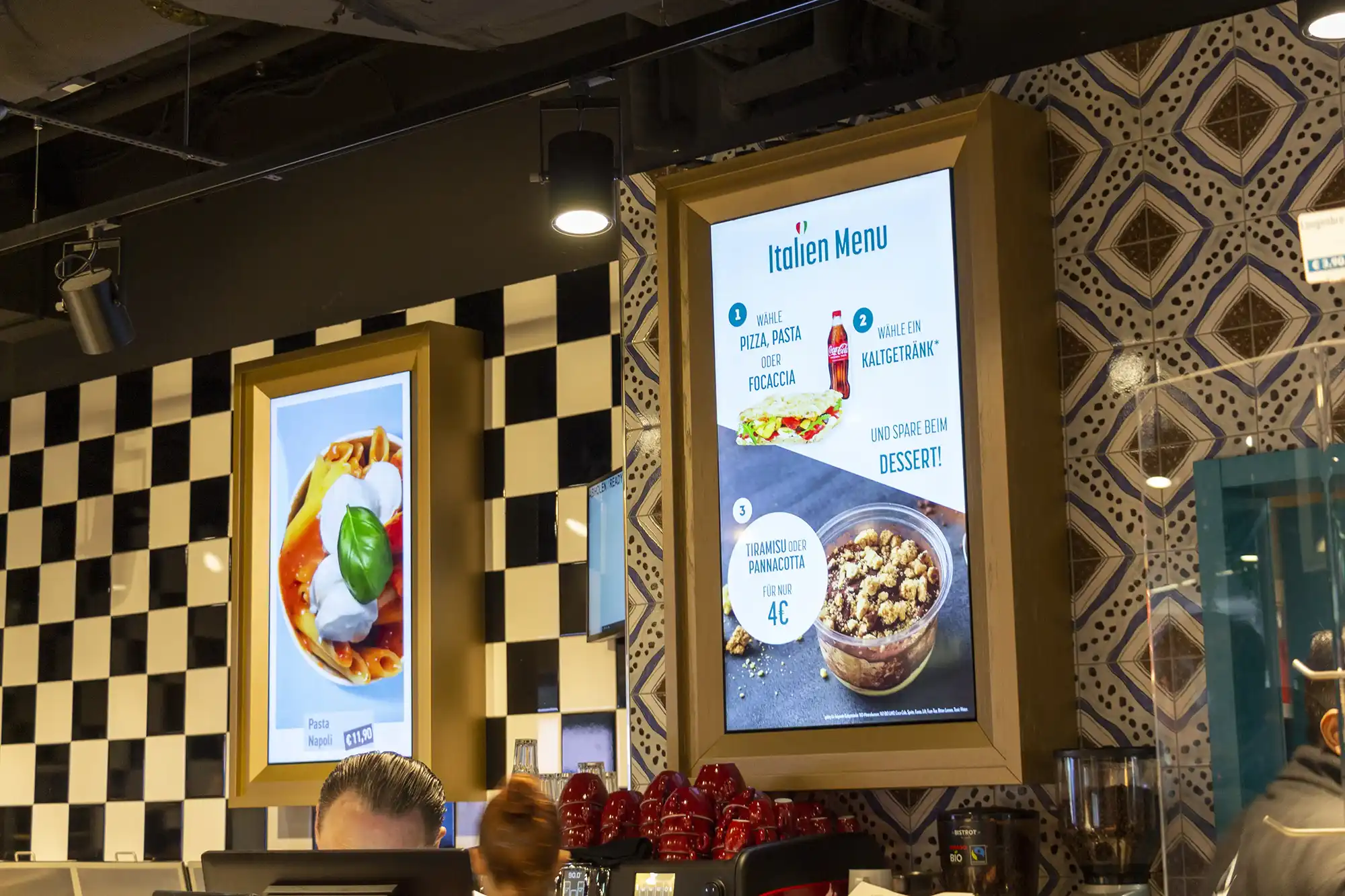
POS stands for "Point of Sale" and refers to the retail location where targeted marketing initiatives are used to boost sales. Through strategies such as POS advertising, digital sales displays, and interactive promotions, companies can trigger impulse purchases and strengthen their brand presence.
In retail, the POS refers to the place where customers come into direct contact with products and make a purchasing decision. This can be a brick-and-mortar store, a supermarket, or a pharmacy, where targeted POS marketing initiatives draw attention to specific products.
POS concepts are strategies and measures designed to shape the point of sale in a way that positively influences customers' purchasing decisions. These include optimal product placement, appealing visual merchandising, and digital solutions such as interactive displays or dynamic price tags.
At the point of sale, businesses can use various forms of advertising to target customers and encourage purchases. In addition to traditional methods such as posters and product placements, digital advertising displays, interactive kiosks, and LED columns offer the ability to flexibly customize content and deliver personalized advertising.
Sign up here for our monthly newsletter. New products, application examples, trade fair innovations, and collaborations with partners are presented here.


