


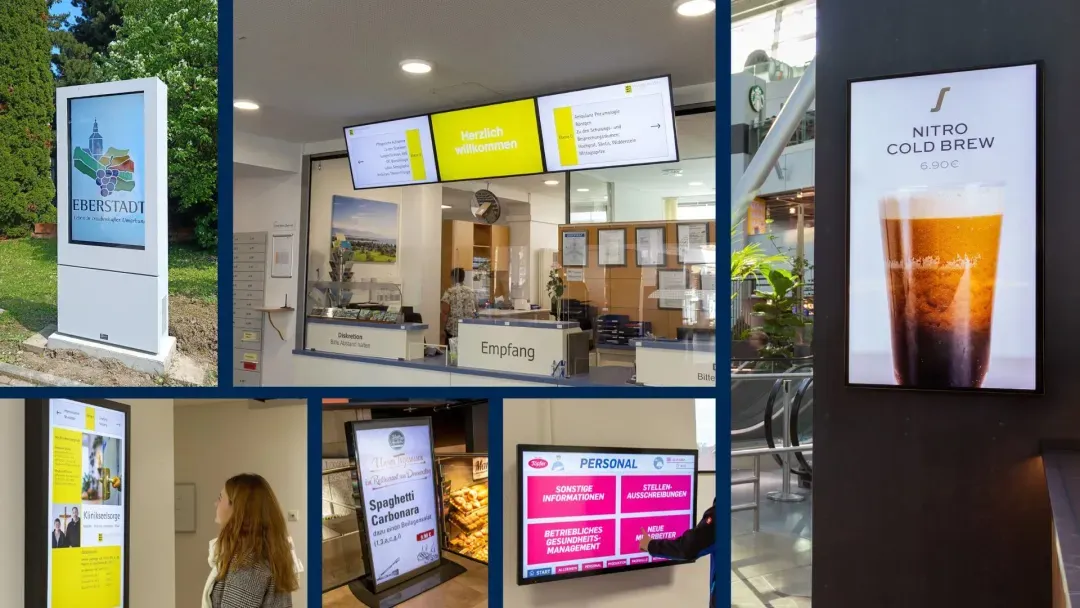
Digital Signage Systeme sind heutzutage aus vielen Branchen nicht mehr wegzudenken. Sie bieten zahlreiche Vorteile, von der Verbesserung der Kundenerfahrung bis hin zur Effizienzsteigerung in der Kommunikation. In diesem How-to-Guide zeigen wir Ihnen, wie Sie erfolgreich Digital Signage Systeme umsetzen können.
Before you begin implementation, you should set clear goals. What do you want to achieve with your digital signage system? Common goals include:
Clear objectives help you measure the success of your project and make the right decisions.
A successful digital signage system is tailored precisely to the needs of your target audience. Think about who your target audience is and what information they need. Examples:
By understanding your target audience, you can create content that is truly relevant and engaging.
The location of your digital signage displays is crucial to their success. Choose locations with high visibility and accessibility. Here are a few tips:
Neben dem Standort spielt die Wahl der richtigen Hardware eine herausragende Rolle. Die richtige Hardware ist das Fundament eines erfolgreichen Digital Signage Systems. Sie muss den Anforderungen des geplanten Einsatzzwecks entsprechen, um optimale Ergebnisse zu erzielen. Hier sind einige wichtige Faktoren bei der Hardwareauswahl:
By choosing the right hardware, you can ensure that your digital signage system works reliably and effectively and conveys your messages to your target audience in the best possible way. We would be happy to advise you on this.
The right software is at the heart of a successful digital signage system. It should be easy to use and flexible. Look out for the following features:
Content is the key to success. Create a content strategy that is updated regularly. Use a mix of:
Plan the installation carefully. Ensure that all technical requirements are met, such as power supply and internet connection. Test the hardware and software thoroughly before putting the system into operation. At Wedeko, we take care of the configuration of the systems.
Train your employees in how to use the digital signage system. They should know how to manage content and respond to technical problems. Good support is essential to minimize downtime.
The successful implementation of a digital signage system requires careful planning and continuous optimization. By setting clear goals, understanding your target audience, and choosing the right hardware and software, you lay the foundation for a successful project. With regular training and support, as well as continuous monitoring and adjustment, you can ensure that your digital signage system delivers maximum value.
The right hardware depends on where it will be used. Key factors include screen size, resolution, brightness, durability, and touch capabilities. Professional, durable displays are especially important for outdoor use or in high-traffic areas.
The right hardware depends on where it will be used. Key factors include screen size, resolution, brightness, durability, and touch capabilities. Professional, durable displays are especially important for outdoor use or in high-traffic areas.
The software controls content, schedules, and playback on the displays. Good digital signage software enables easy content management, centralized control, and integration with social media or other data sources.
Key factors include clear objectives, the right choice of location, appropriate hardware, and content tailored to the target audience. In addition, careful installation, regular updates, and employee training are crucial for long-term success.
Sign up here for our monthly newsletter. New products, application examples, trade fair innovations, and collaborations with partners are presented here.


