


Die digitale Transformation ist für Unternehmen essenziell, um wettbewerbsfähig zu bleiben. Doch die Anschaffung neuer Technologien kann teuer sein. Staatliche Förderungen für Digitalisierung bieten finanzielle Unterstützung, um Investitionen in digitale Lösungen wie Digital Signage, Cloud-Anwendungen oder
IT security measures. In this article, you will learn about the available funding programs, who is eligible, and how to apply for funding.
Digital signage refers to the use of digital screens to display multimedia content such as videos, images, and text. This technology replaces traditional advertising and information methods such as posters or signs and offers numerous advantages:
Real-time updates, interactive content, and greater audience attention. A digital signage system consists of hardware, such as displays, and appropriate software.
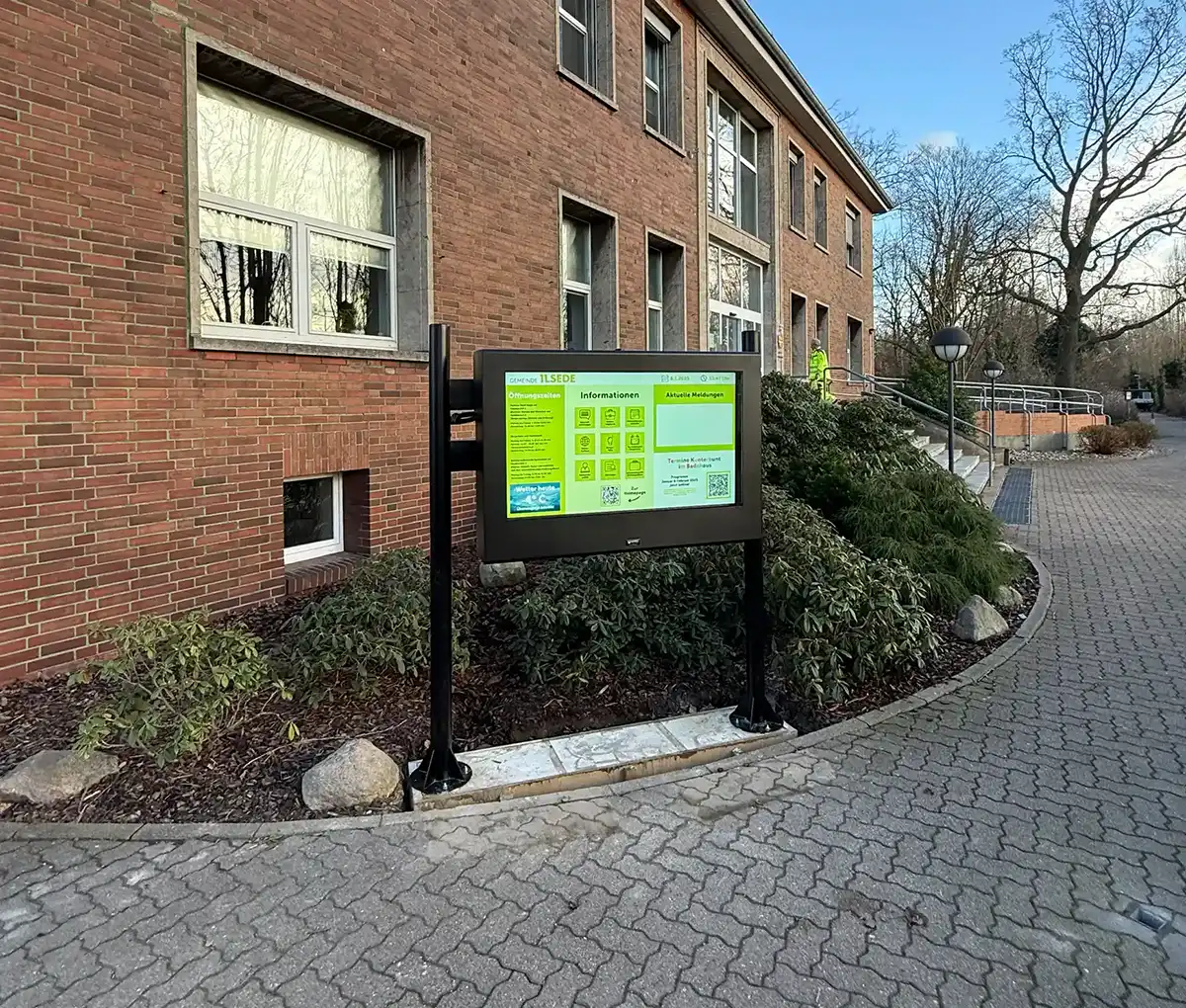
For example, digital citizen information systems and digital display cases in municipalities facilitate communication by displaying announcements and events in real time. The retail also benefits from digital steles, whether for customer guidance, flexible pricing, or advertising current promotions. Government subsidies help reduce the acquisition costs for these technologies and implement the digital transformation efficiently.
The digitization of companies encompasses not only standard operating systems and office software, but also innovative technologies such as digital signage. Digital displays enable efficient customer communication and optimize operational processes.
However, introducing digital solutions can be costly. Funding programs for digitization help companies to manage these investments. With government
Support can reduce hardware and software costs while simultaneously increasing sales and reach through digital advertising measures .
Most digitization funding programs are aimed at small and medium-sized enterprises (SMEs) with up to 250 employees. In many cases , craft businesses, self-employed persons, and start-ups are also eligible to apply .
The following applies in principle:
Company type Employees Annual revenue Annual balance sheet total
Kleinstunternehmen < 10 max. 2 Mio. Euro max. 2 Mio. Euro
Kleine Unternehmen < 50 max. 10 Mio. Euro max. 10 Mio. Euro
Mittlere Unternehmen < 250 max. 50 Mio. Euro max. 43 Mio. Euro
There are two main types of funding:
Which model is most suitable depends on the company's financial situation and the planned investment.
Most eligible projects include :
✔ Investments in hardware and software, including digital signage displays for marketing or corporate communications.
✔ Cloud applications that improve data exchange and storage.
✔ Improving IT security to protect companies against cyberattacks.
✔ Big data analytics to better understand customer behavior.
✔ Training and continuing education to strengthen digital skills within the company.
Some of the previously popular nationwide programs such as "go-digital funding" and "Digital Jetzt funding" are currently no longer being offered. However, there are still funding opportunities at the federal level, particularly through KfW Bank or regional economic development agencies.
KfW funding programs for digitalization
✔ Funding amount: Variable , depending on the program and company size
✔ Funded by: KfW Bank
✔ Who is it for? Small and medium-sized enterprises (SMEs)
✔ What is being funded? Investments in IT security, digital business models, cloud solutions, and digital signage.
✔ Special features: KfW mainly offers low-interest loans, some of which include repayment subsidies.
As there are currently only limited direct funding opportunities at the federal level, many federal states offer their own state programs for digitization . These can include grants or low-interest loans.
Baden-Württemberg: Digitalization Bonus Plus
✔ Funding amount: 12–50% , maximum €12,000 grant or low-interest loan with repayment subsidy
✔ Funded by: L-Bank (Landesbank Baden-Württemberg)
✔ Who is it for? SMEs with up to 250 employees
✔ What is being promoted? Digitization of production, IT security, digital business models, and digital signage.
✔ Special features: Combination of grant and loan possible
Bavaria: Bavaria Digital Bonus
✔ Funding amount: 30–50% of costs, up to a maximum of €50,000 (Digital Bonus Standard: up to €10,000, Digital Bonus Plus: up to €50,000)
✔ Funded by: Bavarian State Ministry of Economic Affairs
✔ Who is it for? Small businesses with up to 50 employees
✔ What is being promoted? IT security , cloud applications, digital signage systems, and process automation.
✔ Special features: Digital Bonus Plus requires a particularly innovative digitization project.
North Rhine-Westphalia: MID digitization
✔ Funding amount: 30–50% funding rate, maximum €15,000
✔ Funded by: Ministry of Economic Affairs, Innovation, Digitalization, and Energy of North Rhine-Westphalia
✔ Who is it for? SMEs with up to 250 employees
✔ What is being promoted? Digitalization strategies , digital products, and services
✔ Special features: High subsidy rate for small businesses.
In addition to the support programs in Bavaria, Baden-Württemberg, and North Rhine-Westphalia , other federal states also offer special digitization bonuses and subsidies . For example , Lower Saxony, Saxony, and Hesse have support programs that, among other things, support investments in digital signage .
Companies should therefore contact the respective state development banks or ministries of economic affairs directly to find the right funding for them.
Applying for a digitization bonus or digital bonus involves several steps:
First, the appropriate program must be found. Here, it should be checked which measures are eligible for funding and which conditions must be met.
Most programs require online applications to be submitted via a portal of the Ministry of Economic Affairs or a regional development bank. Companies must submit a detailed project description . Submit your funding application in good time and ensure it is complete.
Create a detailed project plan that describes the goals, measures, and costs of your digital signage project.
After the application has been submitted, it is reviewed by the relevant authorities. This can take several weeks. If the decision is positive, companies receive a funding commitment.
The funded digitization project must be implemented within a specified period of time — usually a maximum of 12 months. The measures must be documented.
After implementation, companies must submit proof of the investment. The subsidies or repayment subsidies are then paid out.
Government subsidies for digitization offer companies a unique opportunity to implement modern technologies such as digital signage solutions . Digitization incentives can help reduce the costs of hardware and software and drive forward the digital transformation .
Those who obtain information in good time and apply for the right funding can secure their long-term competitiveness. Take advantage of these opportunities to optimize your business processes and invest in a digital future.
Generally, small and medium-sized enterprises (SMEs), craft businesses, self-employed individuals, and startups based in Germany are eligible for funding. A key requirement is usually that the planned investment has a clear connection to digitalization—for example, for digital signage systems, IT security, or digital business processes.
Generally, small and medium-sized enterprises (SMEs), craft businesses, self-employed individuals, and startups based in Germany are eligible for funding. A key requirement is usually that the planned investment has a clear connection to digitalization—for example, for digital signage systems, IT security, or digital business processes.
Funding is often provided for investments in hardware and software, cloud solutions, IT security, process automation, and digital signage systems. Training and continuing education in the field of digitalization may also be eligible for funding.
Government subsidies reduce the investment costs for digital technologies and make it easier for companies to embrace digitalization. Digital signage can be used to streamline customer communication, information processes, and advertising. At the same time, modern digital solutions boost competitiveness and improve visibility at the point of sale.
Sign up here for our monthly newsletter. New products, application examples, trade fair innovations, and collaborations with partners are presented here.


