


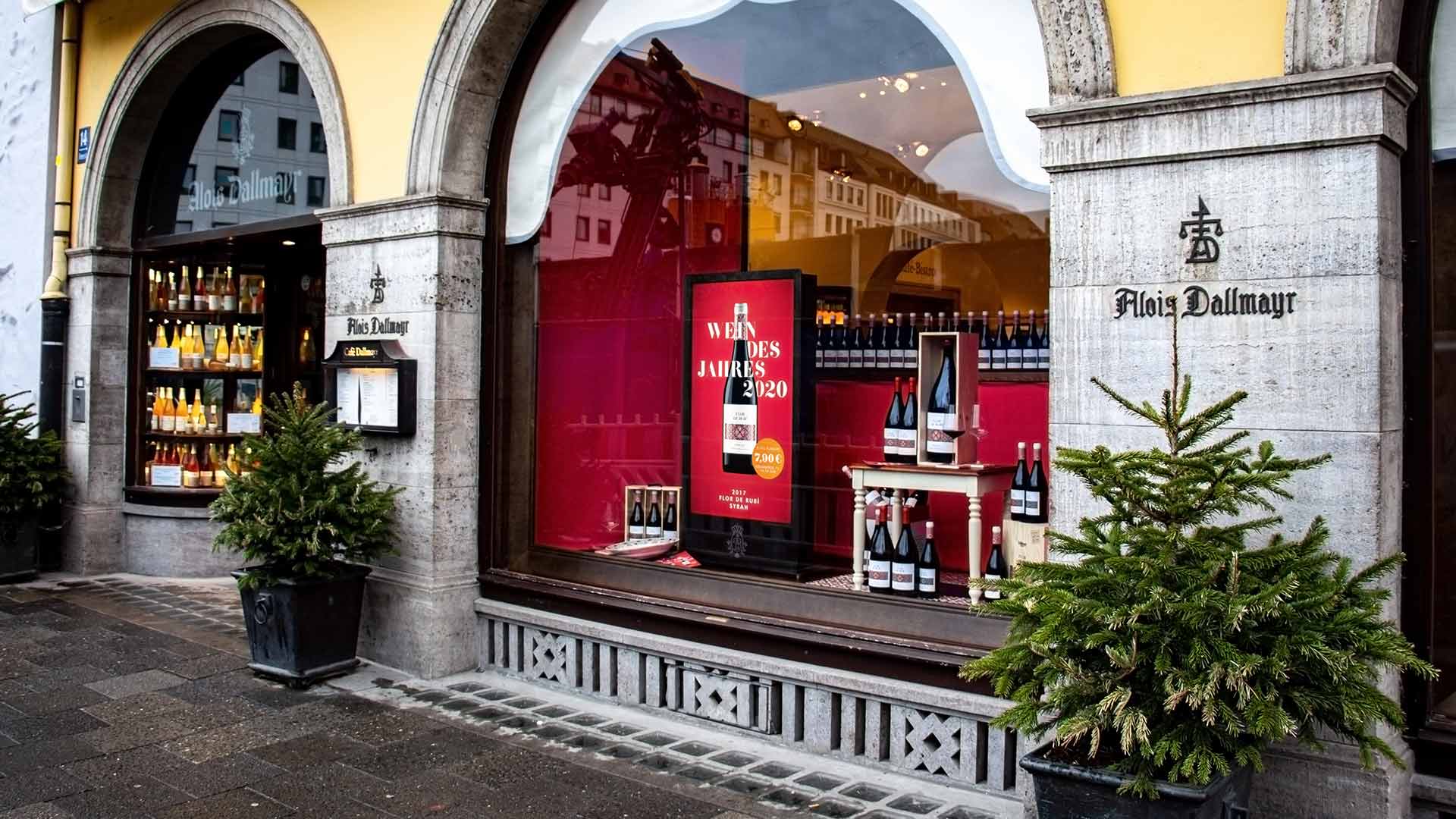
Die richtige Verkaufsförderung kann den Unterschied zwischen einem gut laufenden Geschäft und stagnierenden Umsätzen ausmachen. Besonders am Point of Sale (POS) haben Unternehmen die Möglichkeit mit gezielten Maßnahmen Kaufimpulse zu setzen. Digital Signage ist eine der effektivsten Lösungen, um verkaufsfördernde Inhalte dynamisch und flexibel darzustellen.
Whether through interactive displays, digital kiosks or storefront displays – Digital signage offers numerous opportunities to successfully implement sales promotion. In this article, you’ll learn how digital sales promotion works, what sales promotion measures are available , and what mistakes to avoid.
Sales promotion is a short-term marketing strategy aimed at increasing sales of a product or service. It involves creating time-limited incentives to encourage customers to make a purchase more quickly.
Unlike traditional advertising, which often focuses on building long-term brand loyalty, sales promotion is designed to generate an immediate increase in sales. It can take the form of discounts, special promotions, product demonstrations, or interactive advertising.
Sales promotion is an important component of the marketing mix and complements the traditional strategies of product, price, distribution, and communication. While advertising strengthens brand image over the long term, sales promotion focuses on short-term measures to boost sales. Through targeted sales promotion, companies can promote their products in a focused manner and encourage consumers to make purchases during a specific period.
Besonders in Verbindung mit Digital Signage lassen sich verkaufsfördernde Maßnahmen flexibel und zielgerichtet umsetzen. Beispielsweise können über digitale Displays Rabattaktionen, Sonderangebote oder Treueprogramme beworben werden, um direkt am Point of Sale (POS) die Kaufentscheidung zu beeinflussen. Damit wird Sales Promotion zu einemwirkungsvollen Instrument, das sich nahtlos in den Marketing-Mix integrieren lässt und für eine kurzfristige Absatzsteigerung sorgt.
There are various types of sales promotion that can be used depending on the target audience and the company's strategy:
Consumer promotions are initiatives designed to directly encourage customers to make a purchase. These include:
● Discounts & Special Offers: Reduced prices for a limited time.
● Loyalty programs: Earn points and redeem them for rewards.
● Gift cards & coupons: Discounts on future purchases.
● Product samples & trial offers: Try new products for free.
● Sweepstakes & Contests: Building customer loyalty through interactive promotions.
● ➡ Digital signage example: In a supermarket, digital advertising displays promote a special offer for a new product.
● Volume discounts for wholesalers
● Premium shelf space at the point of sale
● Sales contests with incentives for staff
● Joint advertising campaigns with brand manufacturers
● ➡ Digital signage example: An electronics store uses digital price displays to highlight particularly profitable products.
The goal here is to motivate sales staff through bonuses, training, or commissions.
➡ Digital signage example: Internal training displays inform employees about new sales promotion strategies.
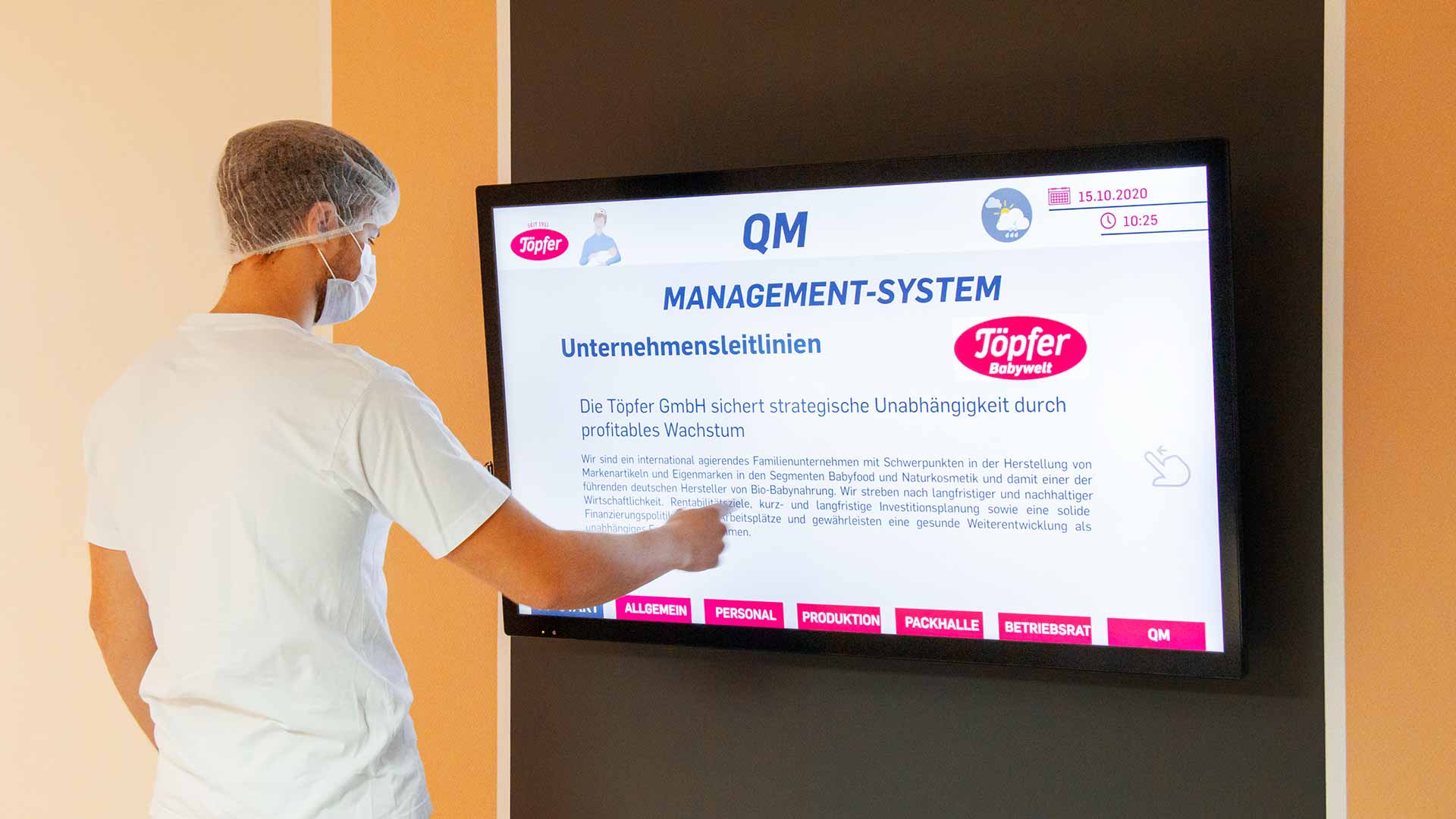
Digital Signage Displays, digital customer displays and LED walls enable modern sales promotion in retail. Among other sectors, this includes food retail and the restaurant industry . There are various examples of how digital signage can be used to implement sales promotion measures:
Digital displays in store windows attract potential customers and provide information about current offers. Moving images and interactive content make advertising messages more effective.
Touchscreens allow customers to access product information, compare prices, or receive personalized recommendations.
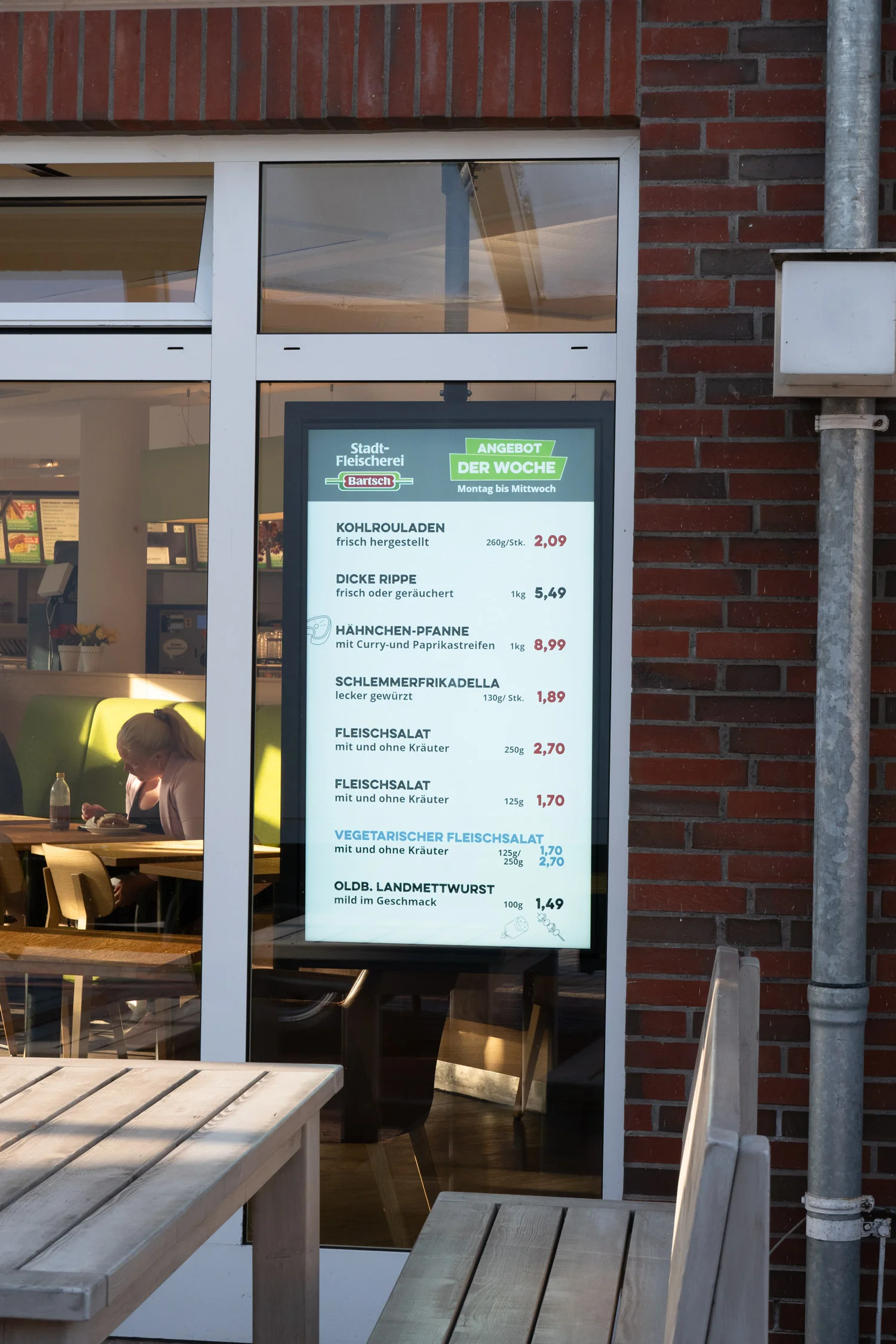
Dynamic price displays can be controlled flexibly. Discounts can be displayed directly on digital price boards or LED pillars.
By integrating social media feeds into digital advertising displays, current trends, customer reviews, and influencer campaigns can be displayed in real time.
AI-powered systems allow advertising content to be tailored based on the time of day, location, or target audience.
By using digital signage, companies can achieve multiple sales goals at the same time:
● Speed up purchasing decisions – Customers are directed to offers right at the point of sale.
● Effectively promote new products – Interactive displays enable real-time product presentations.
● Strengthen customer retention – Digital loyalty programs boost customer loyalty.
● Encourage bundled purchases – cross-selling through digital recommendations ("Customers who buy this product also like...").
In the retail sector in particular , digital storefront displays, LED advertising pillars, and interactive information kiosks are a proven method of promoting sales.
✅ Flexible content management: Content can be managed using digital signage software depending on the time of day or target audience.
✅ Multimedia presentation: Videos, animations, and interactive elements capture more attention.
✅ Effective customer communication: Promotions can be targeted and delivered in real time.
⚠ Initial investment costs: The upfront costs of digital displays can be high, but they pay for themselves quickly.
⚠ Regular content updates: Content must be kept up to date so it doesn't lose its impact.
⚠ Technical support required: Systems require regular maintenance—so when choosing a provider, it is advisable to select one that includes managed services.
🚫 Showing too much content at once –Customers respond better to targeted, clear messages.
🚫 Failure to update content –Outdated offers or promotions can undermine customer trust.
🚫 Poor placement of displays – Digital signage systems should be placed in highly visible locations.
In the case of sales promotion activities in retail , the correct placement and promotion of products are crucial to sales success. A fashion store can use digital window displays to promote current collections, discount campaigns, or exclusive offers in real time. Instead of static posters, moving images and animated advertising messages attract more attention and increase the amount of time potential customers spend in front of the store.
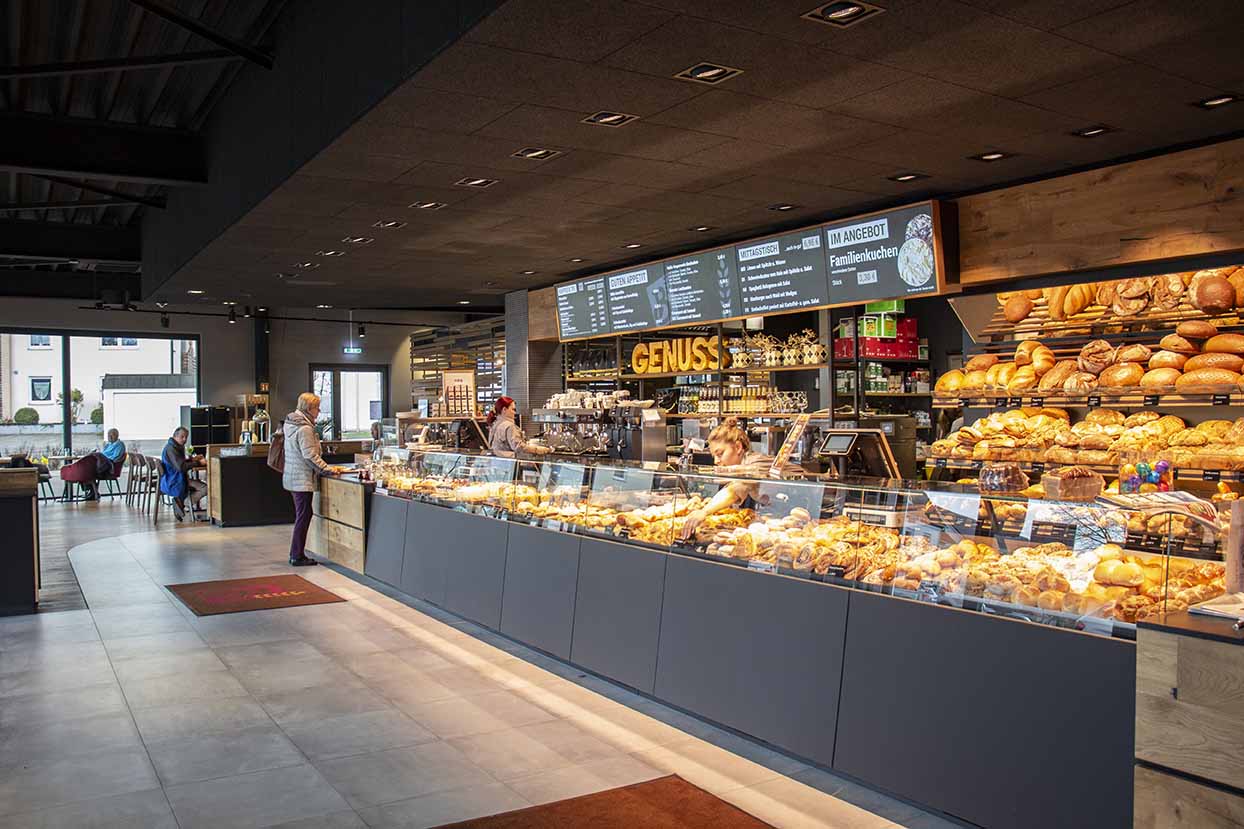
In the restaurant industry, digital signage enables particularly effective sales promotion through digital menu boards. A fast-food restaurant can automatically adjust its menus depending on the time of day—in the morning, breakfast options are highlighted; at lunchtime, special lunch menus are featured; and in the evening, special deals for families or groups are promoted.
A successful digital signage campaign should not only be well-planned but also measurable. Companies need to understand how their digital advertising strategy impacts sales, customer engagement, and brand perception.
Here are the key methods for measuring the success of digital signage promotions:
The most obvious metric is the change in sales figures during and after the campaign.
Comparison of sales figures before, during, and after a digital signage campaign:
● Did sales of the advertised product increase?
● Has there been an increase in the average cart size?
● Has revenue increased in the segment being promoted?
💡 Example: A supermarket uses digital price tags to advertise a limited-time discount promotion on beverages. By comparing sales figures before and after the promotion, the success of the campaign can be accurately measured.
Digital advertising displays at the point of sale (POS)are designed to attract customers and encourage them to spend more time in the store.
Possible measurement methods:
● Heat maps and movement analytics: Sensors can track how long customers spend in specific areas.
● Entry and exit counts: Did visitor numbers increase during the digital signage campaign?
● Interaction rate: For touchscreen displays, the number of inputs made can be tracked.
💡 Example: A clothing store installs an interactive fitting room station with digital signage. If more customers use the screen than the previous static advertising signs, this demonstrates the added value of the digital solution.
Using eye-tracking technologies or smart camera systems, companies can measure how long and how intently customers look at a display.
● Which colors, animations, or messages attract the most attention?
● Does the duration of gaze change when advertising content is updated?
💡 Example: A drugstore chain is testing different types of advertising content for a new line of perfumes. Through eye-tracking analysis, the company has found that videos featuring emotional stories are viewed for longer periods than text-only ads.
Digital signage can be linked to social media to measure the success of advertising campaigns even outside the store.
Possible tracking methods:
● Is the digital signage advertisement shared on social media?
● Do customers scan QR codes or click on embedded social media links?
● How often are interactive features (e.g., contests or surveys) accessed?
💡 Example: A fast-food chain uses digital screens with QR codes that direct customers to a social media campaign. By analyzing the number of clicks, the campaign’s success can be tracked.
Sometimes, direct communication with customers is the best way to assess the success of a sales promotion.
Data collection methods:
● Short customer surveys at the digital kiosk or via a QR code on the receipt.
● Feedback boxes in the store or on the website.
● Direct feedback from sales associates or cashiers.
💡 Example: A furniture store uses a digital signage terminal to ask customers for their feedback on its current discount promotion. The results help improve future advertising strategies.
Sales promotion is a short-term strategy designed to boost immediate sales of specific products. It is often used as a limited-time promotion, such as through discounts or special displays. Advertising, on the other hand, is a long-term strategy aimed at building a brand. The goal is to create a positive impression of the company or brand in consumers’ minds.
Sales promotion is a short-term strategy designed to boost immediate sales of specific products. It is often used as a limited-time promotion, such as through discounts or special displays. Advertising, on the other hand, is a long-term strategy aimed at building a brand. The goal is to create a positive impression of the company or brand in consumers’ minds.
Key sales promotion strategies include discounts, coupons, loyalty programs, exclusive offers, and product placements in particularly prominent locations within the store. They also include interactive elements such as contests or social media campaigns that encourage customers to engage with a brand or product. Digital advertising displays reinforce these efforts by dynamically promoting offers, engaging customers through interactive elements, or giving them the opportunity to access product information or reviews directly on the screen.
To boost sales, companies should implement targeted promotional strategies tailored to their target audience. This can be achieved through seasonal offers, personalized discount campaigns, or interactive in-store experiences. The use of digital signage enhances these strategies by directly influencing purchasing decisions at the point of sale through moving images, personalized advertising, and interactive touchpoints, thereby appealing to customers on an emotional level.
Sign up here for our monthly newsletter. New products, application examples, trade fair innovations, and collaborations with partners are presented here.


